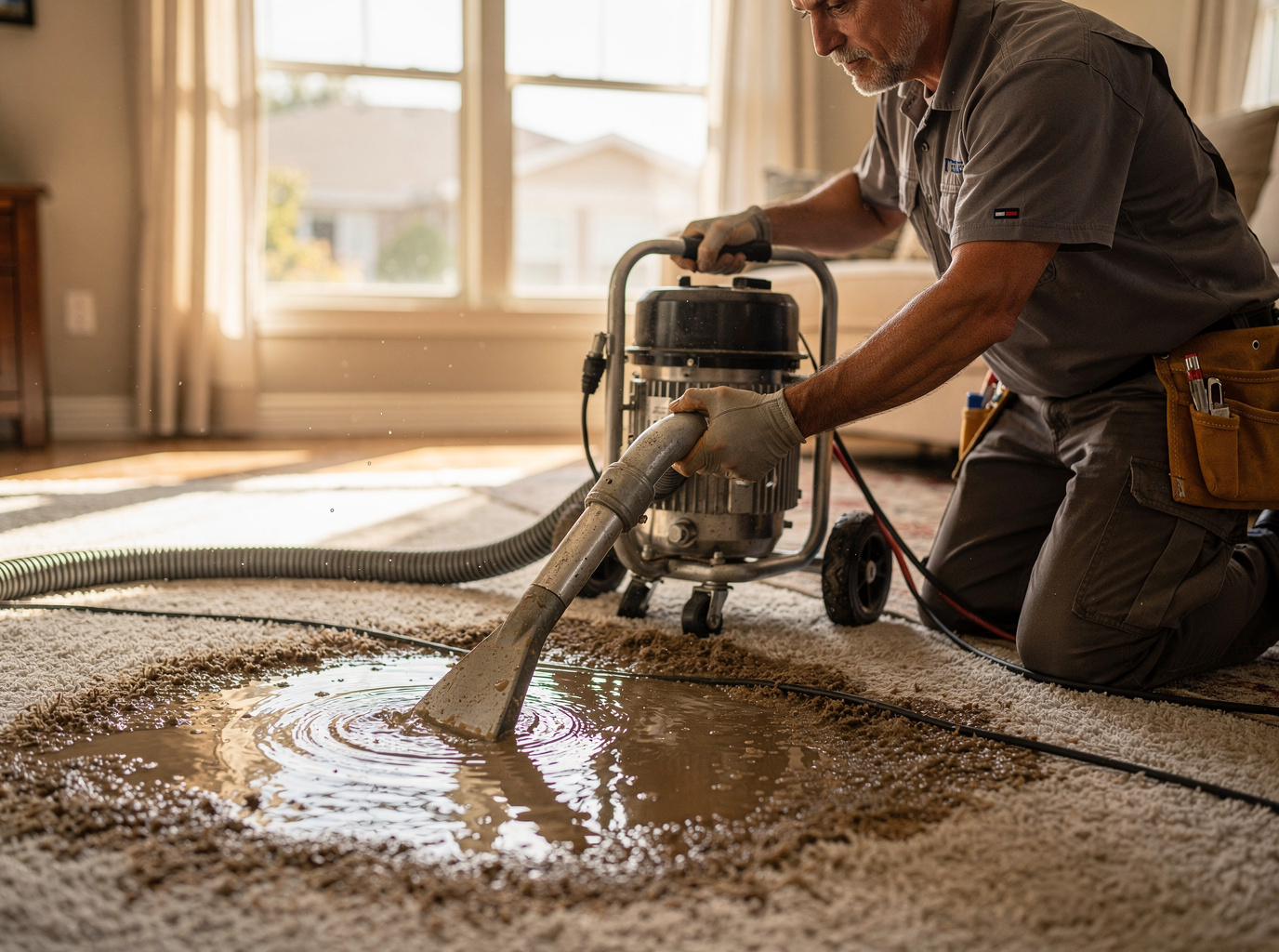
Rockwall homes built before the 2000s often have galvanized or polybutylene lines that corrode where they pass through the clay-heavy soil common along the shores of Lake Ray Hubbard. When a pinhole leak develops under a slab, water migrates along the beam lines and pools under tile or hardwood rather than surfacing quickly. Extraction crews must cut strategic access points and use truck-mounted units rated for 500-plus CFM to pull water from the void spaces before mold sets in the humid Texas summers.
Heavy spring thunderstorms dump several inches in a single afternoon, raising the water table and pushing additional pressure against already compromised joints. Technicians working in neighborhoods such as The Cliffs or Stone Creek routinely encounter leaks that have traveled twenty feet or more before detection. Proper extraction includes removing baseboards, drilling weep holes at low points, and monitoring moisture meters until readings drop below 15 percent on both sides of the wall.
Texas plumbing code requires shut-off valves within five feet of fixtures, yet many 1980s Rockwall builds skipped this detail. When a supply line fails behind a vanity or washing machine, water can travel under cabinets and into adjacent rooms before anyone notices. Extraction here means lifting sections of vinyl or laminate flooring, treating the subfloor with antimicrobial solution, and placing air movers in a cross-ventilation pattern to avoid pushing moisture into drywall cavities.
Technician insight
In Rockwall the clay soil expands and contracts with every heavy rain, flexing older copper lines under slabs until they leak. Homeowners often wait until they see ceiling stains, but by then water has already traveled under three or four rooms and the extraction takes twice as long.
Slab Leak Under Rockwall Kitchen
A homeowner in The Cliffs noticed warm floors near the sink. Meters showed elevated moisture extending into the dining room. Extraction required four access points along the beam lines, removal of 18 gallons from under the slab, and five days of drying before readings normalized.
Plumbing Leak Water Extraction Services We Offer
✓Slab Leak Water Extraction
Locate and pull water from under concrete slabs common in Rockwall ranch homes after supply line failures.
✓Pipe Burst Extraction
Rapid removal of standing water from sudden copper or PEX failures during winter freezes along Lake Ray Hubbard.
✓Fixture Supply Line Extraction
Targeted drying behind toilets, sinks and tubs where older angle stops leak into subfloors.
✓Washing Machine Leak Extraction
Pull water from laundry rooms and adjacent walls after supply hose or drain line failures.
✓Water Heater Leak Extraction
Remove water from utility rooms and surrounding flooring when tank or connection leaks occur.
Plumbing Leak Water Extraction Cost in Texas, Rockwall
| Service | Typical Range | What Affects It |
|---|---|---|
| Initial Assessment And Extraction | $350–$750 | Higher when slab access or multiple rooms required |
| Daily Drying Equipment | $150–$300 per day | Number of air movers and dehumidifiers needed |
| Wall Or Cabinet Cavity Extraction | $200–$500 | Extra when baseboards or flooring must be lifted |
| Post-Job Moisture Verification | $100–$200 | Final meter readings and report |
Ranges are typical for Texas, Rockwall and confirmed with an exact written quote before any work starts.
How it works
- 1
On-Site Assessment
Technician maps moisture with meters, identifies leak source and determines extraction points without guesswork.
- 2
Water Removal
Truck-mounted pumps and wand heads extract standing and trapped water from slabs, walls and floors.
- 3
Drying And Monitoring
Air movers and dehumidifiers run until moisture readings stabilize, with daily checks on Rockwall jobs.
- 4
Final Verification
Return visit confirms dry conditions and documents affected areas for insurance or repairs.
Pricing
Cost depends on access difficulty, volume of water, and whether slab or wall cavities are involved.