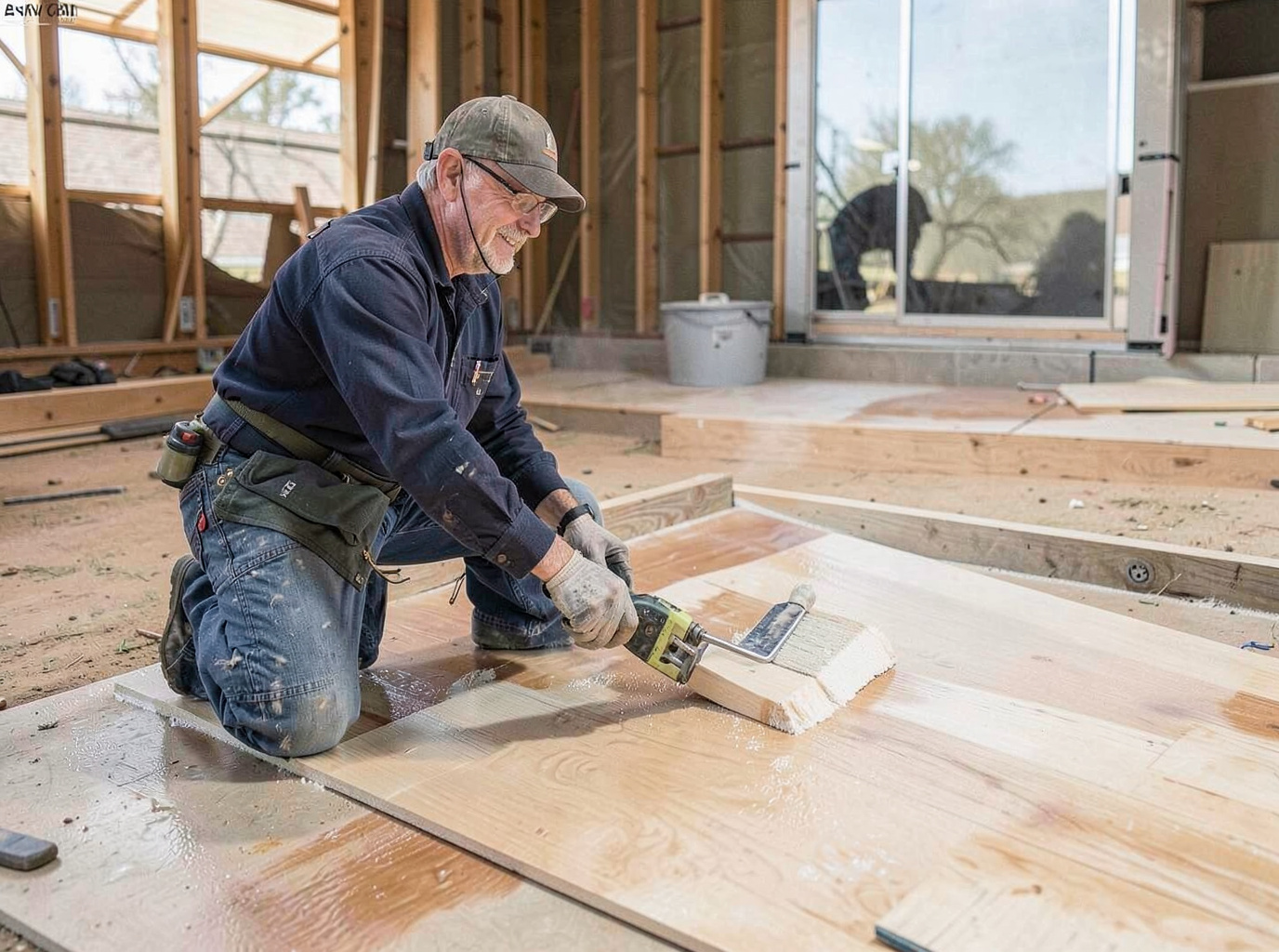
Rockwall's clay-heavy soils and proximity to Lake Ray Hubbard create persistent moisture problems once floodwater reaches subfloors. Older homes along T L Townsend Drive and in the historic downtown area often have hardwood or laminate over plywood that traps water against joists, allowing hidden mold to form within 48 hours. Extraction crews must pull baseboards, lift sections of flooring, and place air movers and dehumidifiers directly under the surface rather than relying on surface fans alone.
Texas summer humidity frequently keeps relative moisture levels above 60 percent, slowing evaporation from under tile and engineered wood. Technicians use moisture meters calibrated for local plywood grades and run commercial desiccant units for several days, checking readings at multiple points across the room. Failure to reach below 12 percent moisture before reinstallation commonly leads to cupping or adhesive failure weeks later.
Edge cases include slab-on-grade homes in newer subdivisions east of Highway 205 where water migrates under vinyl plank through expansion joints. In these situations crews cut strategic weep holes, apply negative air pressure, and monitor with data loggers to confirm the slab has returned to ambient dryness before any finish work begins.
Technician insight
In Rockwall the thing that catches most people out with Water Under Flooring Drying is how quickly Lake Ray Hubbard humidity re-saturates plywood once the equipment is pulled too soon. Clay soil around the 75032 zip code holds water against foundations longer than sandy soils farther west, so we always run data loggers an extra day even when surface readings look dry.
Historic Home Near Downtown Rockwall
Storm runoff entered a 1970s ranch through a low window well. Water wicked under oak flooring and stayed trapped against the plywood. We lifted baseboards, placed directed airflow and desiccants, and monitored readings for four days until moisture dropped below 11 percent across the room. The homeowner reinstalled the same boards without cupping or mold growth.
Water Under Flooring Drying Services We Offer
✓Subfloor Moisture Testing
Pin and pinless meter readings across multiple zones to map trapped water before any drying begins.
✓Carpet Pad Removal and Disposal
Rapid extraction of saturated padding that holds water against the slab or plywood in Rockwall residences.
✓Hardwood Floor Drying
Targeted airflow and dehumidification under lifted boards to restore oak and pine without refinishing.
✓Laminate Underlayment Extraction
Removal of foam or felt layers that trap floodwater and cause swelling in modern Rockwall builds.
✓Tile Grout and Subfloor Drying
Drilling access points and applying negative pressure to dry concrete or wood beneath ceramic tile.
Water Under Flooring Drying Cost in Texas, Rockwall
| Service | Typical Range | What Affects It |
|---|---|---|
| Subfloor Assessment | $175–$300 | Larger homes or multiple rooms increase time on site |
| Carpet Pad Extraction | $250–$450 | Includes disposal and basic drying setup |
| Full Under-Floor Drying Package | $650–$1,200 | Equipment run time and number of zones affect final cost |
Ranges are typical for Texas, Rockwall and confirmed with an exact written quote before any work starts.
How it works
- 1
On-Site Assessment
Technicians arrive at the Rockwall address, locate water entry points, and map moisture levels under flooring with calibrated meters.
- 2
Water Extraction
Saturated materials are removed and remaining liquid is extracted using truck-mounted or portable units suited for Texas clay soils.
- 3
Equipment Placement
Air movers, dehumidifiers, and moisture probes are positioned beneath flooring to pull humidity from subfloor cavities.
- 4
Daily Monitoring
Readings are logged until moisture content stabilizes below 12 percent, confirming the structure is ready for restoration.
Pricing
Costs depend on square footage, floor type, and duration of drying needed after Rockwall flood events.